
Growing Geelong - The Evolution of a Port City
When you walk the streets and laneways of Geelong, look up. You’re in an open-air museum.
(7 minute read)
Why should your building inspector know about this? Because when, why, how and where a building is built and used determines the risks it presents.
Looking closely at Geelong’s building stock, from the seawater-sprayed waterfront bluestone to the shimmering glass of Malop Street. You’ll see how this city has reinvented itself many times over with each building showcasing the available building materials and technologies of the time.
But it takes more than materials and technology to make a city. Truly creative local business people, bold developers, informed planners, subtle architects and capable builders fostered a uniquely Geelong feel. All in response to the needs and desires of local people and international markets.
The Wool Cathedral Era (1850s – 1920s)
In the mid-19th century, Geelong sat perfectly between the vast sheep stations of the Western District and the shipping lanes to London. The building stock of this era is defined by the Wool Store.
The skyscrapers of their day, constructed initially from local bluestone and later from hard-fired red brick, like the now iconic Federal Woollen Mills, were built for function and form. Two key factors informed the design: weight and light. Because wool was graded by sight and priced by weight the top floors featured sawtooth roofs with south-facing windows to naturally illuminate the vast inner spaces and catch the right light required for grading fibres.
Architectural Legacy: The artfully reimagined Federal Mills Innovation Precinct on Mackey St tell the story of Geelong’s wool industry, their thick masonry walls now housing a buzzing innovation precinct instead of wool bales.
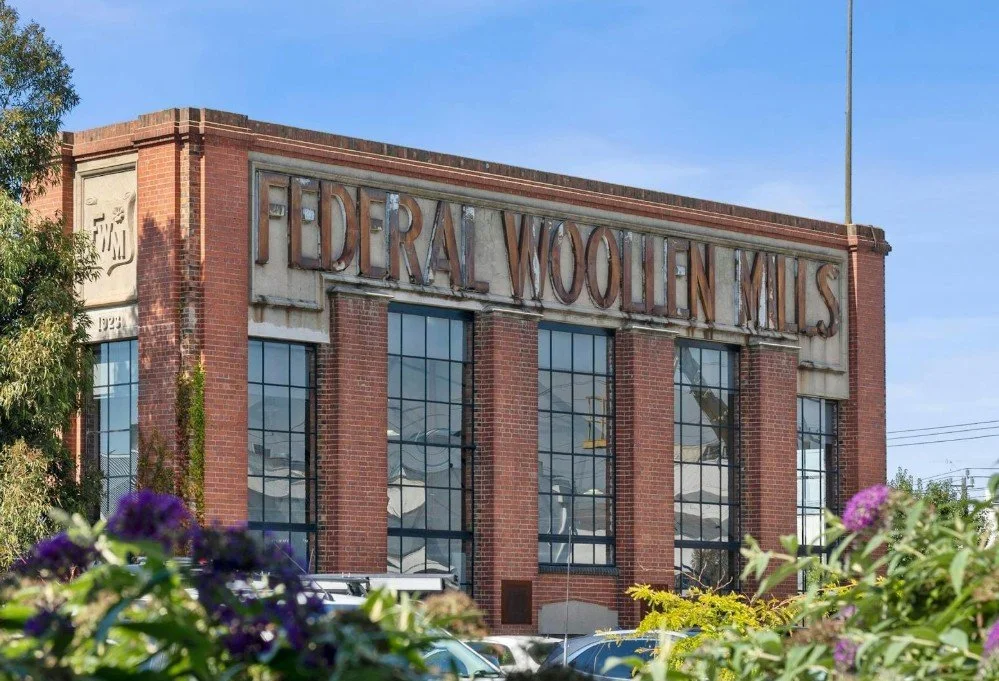
Federal Mills, North Geelong, Pivot City Innovation District by Hamilton Group
The Victorian Grandeur & High Streets (1880s – 1910s)
Thriving industry resulted in a growing middle class presenting new needs and commercial opportunities. The era of the High Street arrived with excellent examples along Moorabool and Ryrie Streets still in place. The building stock became lighter, more decorative, and aspirational.
Ornate masonry shopfront facades, featured tall decorative parapets to hide simple corrugated iron roofs. Developers used Victorian and Edwardian styling (plaster moldings, Corinthian columns, and arched windows etc.) to project a sense of permanence, history and stability. These buildings were narrow and deep, constrained by the original urban layout designed by Robert Hoddle for Geelong in 1937-38 shortly after he used the same grid design for Melbourne. This format created the dense, walkable character of inner city Geelong that we still see today.
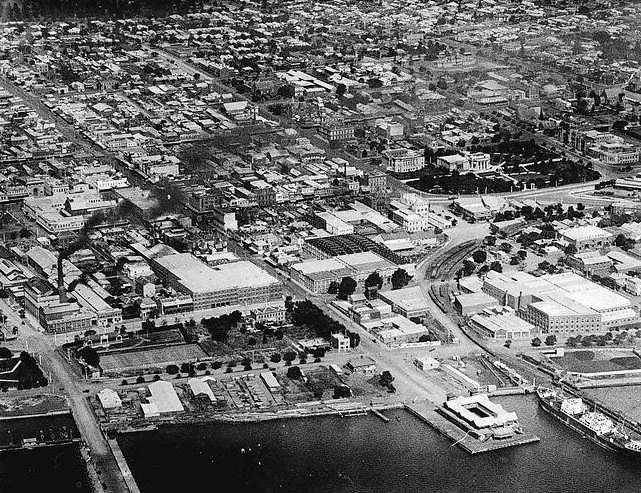
Geelong’s Hoddle Grid - Victoria Museum Collection
The Industrial Powerhouse (1920s – 1970s)
When Ford Australia opened its doors in 1925, Geelong’s commercial DNA changed. The city’s labour force transformed from storing and transporting to manufacturing. Buildings embraced new materials like reinforced concrete and long-spanning steel-frames as a cheaper more cost-effective way to create large warehouses when compared to the warm masonry and decorative beauty of the wool warehouses.
In the heart of the city, Art Deco and International Style offices began to appear, favoring the clean lines and functionality of the European Bauhaus and early “modernism” movements over Victorian ornamentation.
However, the most significant commercial buildings of the time were the sprawling, horizontal factories in North Geelong and Corio. These were built for the manufacturing assembly line with long, flat, utilitarian designs marking the moment Geelong began to sprawl away from the bay enabled by the automobile.
The era of “car-centric” town planning, where everyday people could afford a car and city planners expanded city limits through road networks linked to suburban residential communities, gives us the sprawling city landscape that we still see the echoes of today.
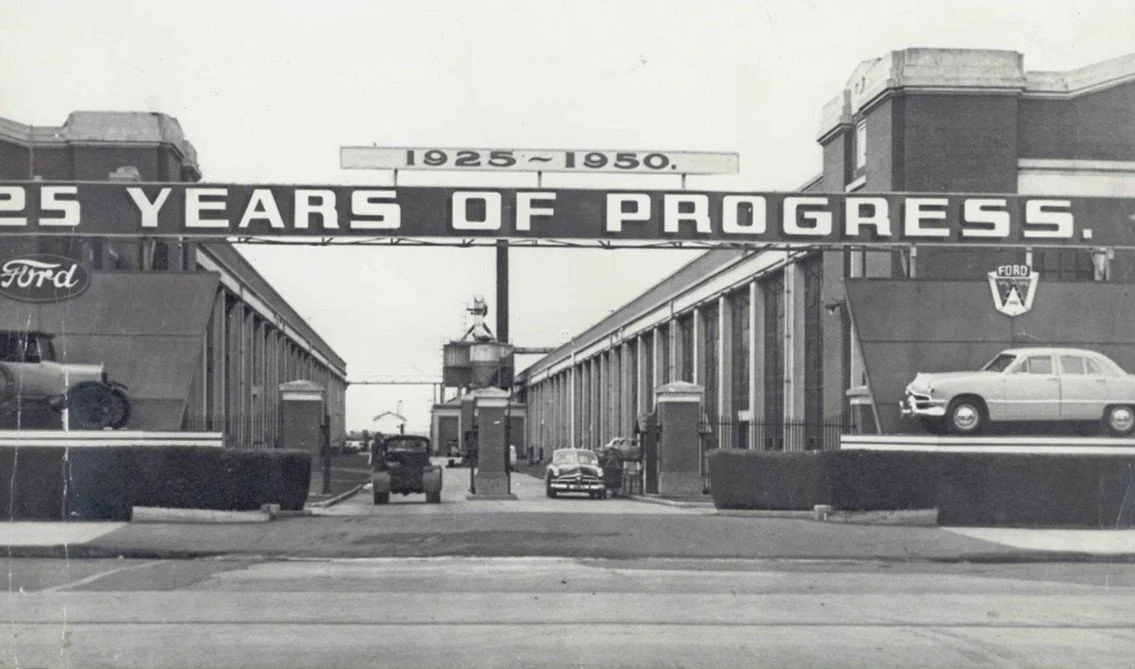
Ford Factory Celebrates Anniversary - Geelong City Council
The Era of Internalisation (1980s – 2010s)
As manufacturing began its long decline due to increased competition more accessible global markets and developments in logistics, Geelong’s commercial stock took a defensive turn. The establishment of the car as the primary mode of transport in the previous decades meant the traditional high street was under threat.
The response was the Big Box Mall. Major developments like Market Square and Westfield (then Bay City) saw commercial turn from outward looking high streets to inward looking malls. The design of these buildings was driven by maximising internal usable space (gross floor area and net lettable area for those in the know), climate control and internal flow rather than street-level engagement.
During this same period, however, the first seeds of Adaptive Reuse were planted, as visionaries like Hamilton Group and Deakin University previously mentioned began converting the redundant wool stores into reimagined and revitalised urban spaces supporting Geelong’s growth into the knowledge economy.
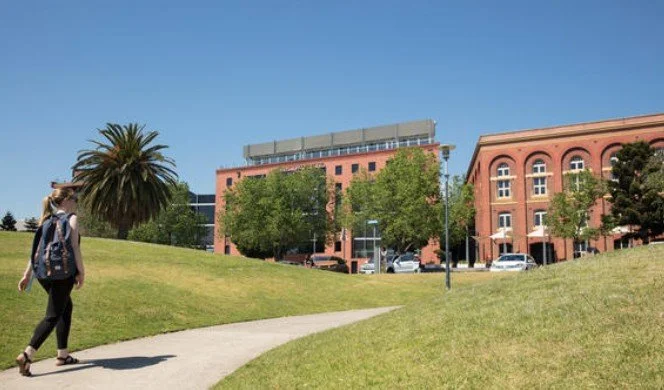
Deakin University Campus, Geelong - Deakin University
The Modern Skyline (2015 – Present)
Thanks to tireless advocacy from local businesses and Geelong City Council, support for Government in the form of The City Deal and reforms to the local planning scheme Geelong is experiencing its most rapid growth in a century. The new building stock is dominated by A-Grade hotel, mixed use and medical assets in the CBD and Carbon-Neutral Civic Spaces.
The drivers today are the "Big Three": Health, Education, and Government (NDIS, WorkSafe, TAC). Unlike the heavy, opaque wool stores of the past, these buildings are designed for transparency and environmental performance. They utilize high-performance glass to maximize views of Corio Bay, while "Biophilic" design (integrating plants and natural light) replaces the dark industrial offices of the mid-century.
The city has moved from a place of heavy labour to a place of "wellness" and "collaboration," reflected in the forward-thinking designs of the new Wurriki Nyal civic precinct.
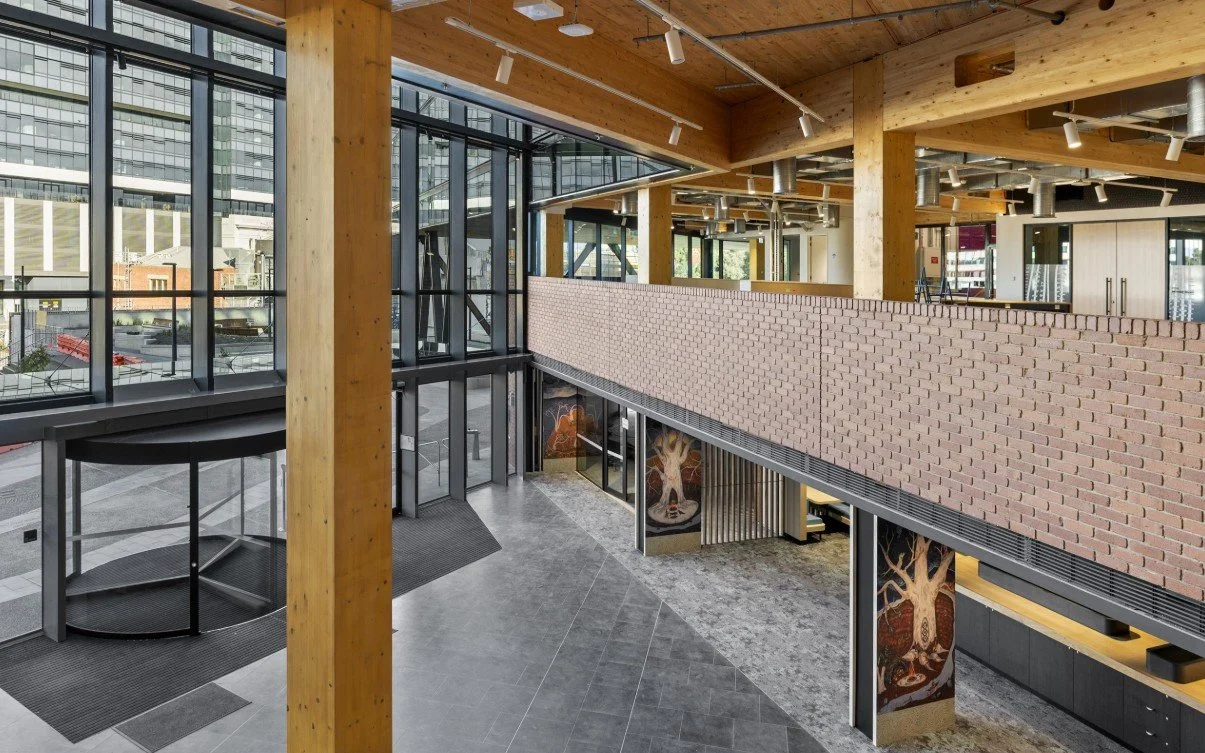
Wurriki Nyal Civic Precinct - Geelong City Council
Disclaimer: The content provided in this article is for general informational purposes only. Every site is different and anyone seeking site specific advice should seek professional guidance.