
Beyond the Surface - The Chemical History of Land
Next time you take the dog for a walk, spot and think for a minute. You aren't just standing on dirt; you’re standing a chemical time capsule.
(7 minute read)
Why should your building inspector know about this? Because the history of a site, what was built, spilled, buried or burned there, determines the physical and financial risks it presents today.
Looking closely at the landscape of our growing towns and cities, you see more than just architecture. You see the chemical footprint of our progress. From the heavy metals of the early industry to the complex hydrocarbons of the manufacturing boom, every era of industry has left a signature in the soil.
But a "contaminated" label isn't a death sentence for a site. With the right lens and pragmatic advice, these sites represent the ultimate opportunity for urban renewal. It takes informed planners, brave developers, and expert technical due diligence consultants to turn a "brownfield" liability into a community asset.
The Early Industry & Tanneries (1850s – 1900s)
In the early days of our cities, industry and residency lived side-by-side. Small-scale operations like tanneries, blacksmiths, and gasworks were the lifeblood of the local economy.
The legacy of this era is often found in heavy metals. Gasworks, which turned coal into light for our streets, left behind Polycyclic Aromatic Hydrocarbons (PAHs) and cyanide. Tanneries, essential for the leather trade, often introduced Chromium into the groundwater.
The Property Risk: These contaminants are stubborn. They don't evaporate; they sit, waiting for a developer to dig a foundation and rediscover a century-old problem.
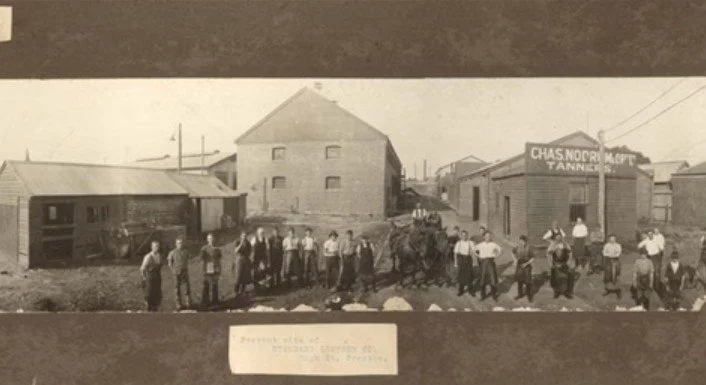
Charles Nordrum’s Tannery, High Street, South Preston - Darebin Libraries
The Age of "Wonder" Materials (1920s – 1970s)
As we moved into the industrial powerhouse era, the chemical toolkit expanded. An age of mass production with reliance on substances we now treat with extreme caution.
This era gave us the widespread use of Asbestos in factory lagging and "fibro" sheets that can result in mesothelioma and asbestosis; and the introduction of Lead in high-durability paints that can cause to anemia and cognitive impairment.
It was also the heyday of the underground storage tank (UST). Every local corner store that doubled as a petrol station buried a steel tank in the ground. Over decades, many of these "invisible" tanks succumbed to corrosion, slowly leaking petroleum into the surrounding sandy loam.
The Property Risk: A "clean" looking warehouse from the 50s may hide a plume of hydrocarbons in the soil migrating through the water table across the site and into neighboring land. This creates a primarily strict liability for environmental contamination and civil liability for damages like nuisance, negligence or trespass.
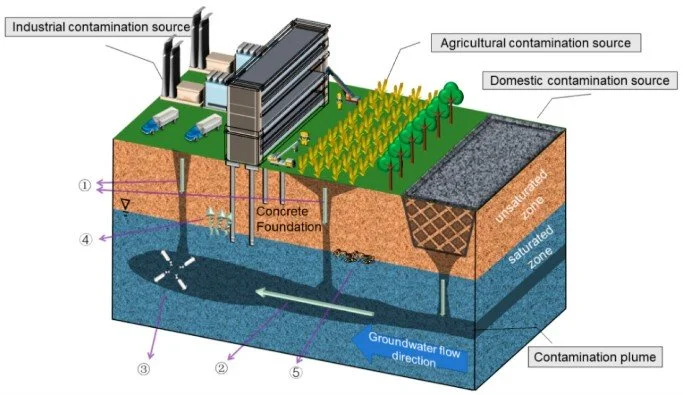
Transport processes of contaminants: 1. Infiltration 2. Advection 3. mechanical dispersion and diffusion 4. volatilization and 5. biodegradation - Sydney University, Department of Built Environment
The Chemical Shift (1980s – 2010s)
As heavy manufacturing was outsourced to other countries through globalisation, the types of contaminants used at home shifted. We moved away from soot and slag toward more complex, synthetic "forever chemicals" like PFAS (per- and polyfluoroalkyl synthetics) found in firefighting foams and various industrial solvents used for degreasing machinery.
In this era environmental science caught up with our industrial ambition and we saw the first strict regulations around waste disposal, moving away from the "out of sight, out of mind" philosophy of the previous century.
The Property Risk: Even modern sites can carry diffuse contamination; pollutants that didn't come from a single spill but from decades of runoff from car parks or transit hubs or a single fire controlled with PFAS fire foam.
Interesting Read: You might recall how PFAS was found on the Victorian State Government’s West Gate Tunnel Project and threatened the whole project’s viability.
The original cost plan forecast a total project cost of circa $5.5 billion. The end result was $10.2 billion largely due to legal and logistics costs arising from the clean up.
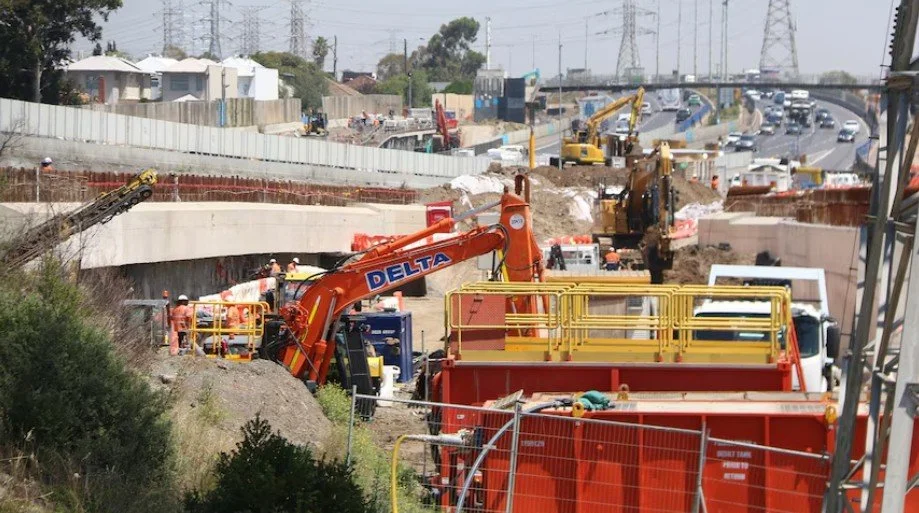
Victoria’s EPA Reverse Approval for West Gate Tunnel Project Toxic Soil Dumps - ABC News, December 2020
The Era of Remediation & Adaptive Reuse (Present Day)
Today, our modern property market is defined by the Circular Economy. So if you own contaminated land and want to redevelop it there are very strict guidelines and monitoring procedures in place.
We are seeing a fascinating evolution resulting in adaptive soil reuse. Instead of simply digging up contaminated earth and dumping it in a landfill, methods like bioremediation (deploying microbes to metabolise and transform oil spills) and phytoremediation (using plants to draw heavy metals out of the ground).
Old industrial sites are being transformed into wellness precincts and high-density residential hubs through the application of cutting edge scientific methods.
The transparency we see in the glass facades of our new CBDs is mirrored in our environmental reporting; a Phase 1 Environmental Site Assessment is now as essential to due diligence as a structural report.
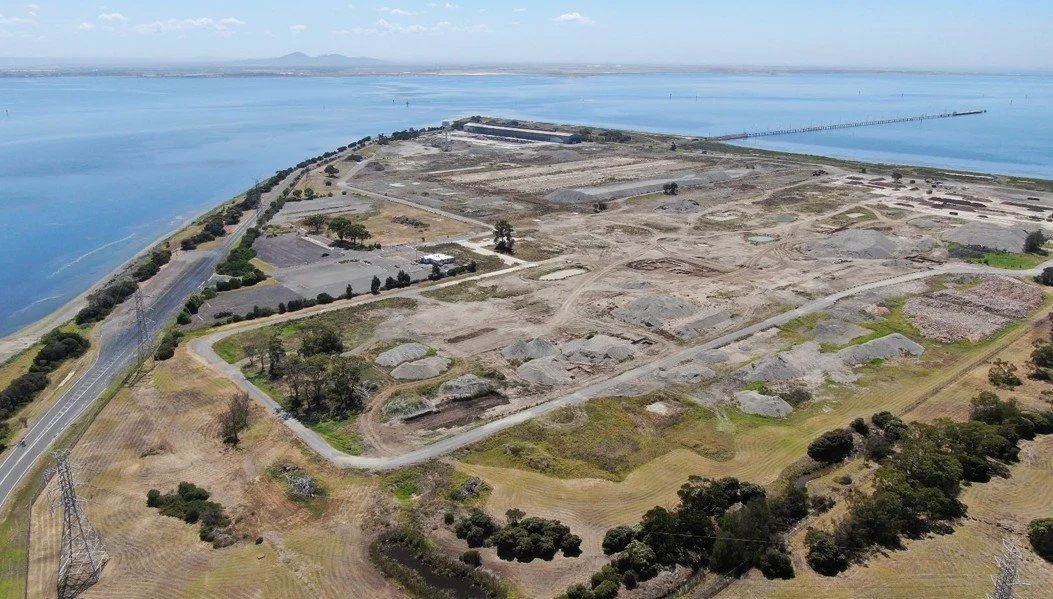
Alcoa Point Henry Undergoing Bioremediation in 2022 - Alcoa Point Henry, Community Advisory Board Paper March 2022
Why it matters for your next move
Understanding the "Source-Pathway-Receptor" model isn't just for scientists; it’s for savvy investors. Knowing that a site used to be a dry cleaner or a timber yard allows you to price the risk, plan the remediation, and negotiate a discount on the sites price before you commit to owning it.
Disclaimer: The content provided in this article is for general informational purposes only. Every site is different and anyone seeking site specific advice should seek professional guidance.